
University of Illinois Springfield Counseling Programs
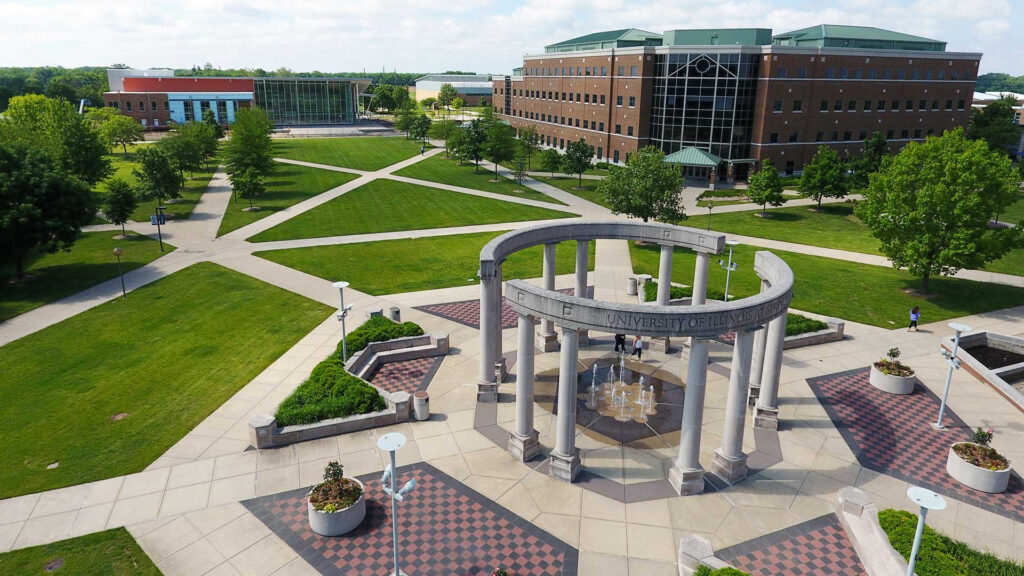
The Department of Counseling and Social Work (CSW) at University of Illinois Springfield excels at teaching practical skills that students can use directly in clinical fields. Faculty members build close relationships with students to promote their growth as helping professionals. Their dedication shows in both student wellbeing and educational progress.
The University of Illinois Springfield counseling programs believe in every person’s worth and dignity. Students learn the most important aspects of self-awareness and personal growth throughout their lives. This belief shapes the program’s structure and teaching methods.
The Human Development Counseling (HDC) program features three concentrations, all fully accredited by the Council for Accreditation of Counseling and Related Educational Programs (CACREP). Students can choose from Clinical Mental Health Counseling, School Counseling, and Marriage, Couple, and Family Counseling. This accreditation means graduates can qualify for proper certification or licensure after completing their studies.
On top of that, the program adapts to fit both traditional and non-traditional students’ needs. This flexibility makes the program available to aspiring counseling professionals with different life situations and schedules.
The school creates an inclusive environment that welcomes diversity and pushes for social change to tackle society’s inequities. This focus on social justice helps prepare counselors who can work well with people from all backgrounds and settings.
Program graduates work in many professional settings. School counselors serve in K-12 schools, while clinical mental health counselors and marriage and family therapists work in mental health agencies, hospitals, correctional facilities, social welfare organizations, rehab centers, and universities. Many alumni start private practices or join government agencies and residential treatment centers.
Both undergraduate and graduate programs include essential field experiences that prepare students to start their careers right after graduation. These hands-on components help students develop and show their skills before entering the workforce.
Students who complete these programs become qualified helping professionals ready to make real differences in their chosen fields. The mix of strong academic preparation, practical experience, and personal growth creates well-rounded counseling professionals who can meet the needs of individuals, couples, families, and communities.
What counseling programs does University of Illinois Springfield offer?
The University of Illinois Springfield’s Human Development Counseling (HDC) program features three Master’s degree concentrations, each fully accredited by the Council for Accreditation of Counseling and Related Educational Programs (CACREP). These specialized pathways help graduates launch their careers in a variety of professional counseling roles.
The Clinical Mental Health Counseling concentration gives students the skills to work with individuals, groups, couples, and families. Students become skilled at eight core areas: professional counseling orientation and ethical practice, social and cultural diversity, human growth and development, career development, counseling relationships, group counseling, assessment and testing, and research and program evaluation. Students must complete specific courses including HDC 542, HDC 544, and two elective courses, while gaining practical experience at approved community agencies.
The Marriage, Couple, and Family Counseling concentration helps students master relationship and family counseling services. Graduates can qualify as Licensed Professional Counselors and/or Associate Marriage and Family Therapists in Illinois.
The School Counseling concentration has four additional HDC courses beyond core requirements, adding up to 61 required credit hours. This ISBE-approved program helps students earn their school counselor licensure endorsement in Illinois. Students need passing scores on both the Test of Academic Proficiency (or equivalent) and the School Counselor Content Test (Test #181).
Graduates find exciting opportunities in many settings. Clinical mental health and marriage counseling graduates often work in:
- Mental health agencies and hospitals
- Correctional and social welfare organizations
- Rehabilitation centers and human relations agencies
- Higher education institutions
Career paths include roles as career counselors, substance abuse counselors, marriage therapists, crisis intervention counselors, or private practitioners.
The program maintains a close-knit community of about 75 students with small class sizes averaging 15 students. During the 2024-2025 academic year, 24 students completed these programs successfully.
Students who complete their chosen HDC concentration can qualify for State of Illinois licensure as Licensed Professional Counselors (LPC) and/or certification through the National Board of Certified Counselors. School counseling graduates are ready to start their careers in K-12 educational settings.
Internships/Practicum at UI Springfield
Clinical experiences are the foundations of University of Illinois Springfield’s counseling programs. Students get hands-on opportunities to apply theoretical knowledge in ground settings. The Department of Human Development Counseling uses a progressive three-tier system of supervised counseling experiences that builds professional competence step by step.
Practicum Requirements
Students must complete the Prepracticum and several foundational courses (HDC 501, 511, 513, 515, 546, 575) to become eligible for HDC 587 Professional Experience: Practicum. Clinical mental health counseling students complete this vital field experience at approved community agencies. Students develop their individual and group counseling skills with actual clients under supervision during practicum.
The supervised practicum needs a minimum of 100 clock hours. This includes at least 40 hours of direct service work with appropriate clientele. Students must complete at least 25 hours of individual, couple, or family counseling within these direct service hours.
Internship Structure
The program concludes with HDC 590 Professional Experience: Internship. This in-depth supervised field experience helps students refine their practicum skills. Students can enroll only after completing practicum and required coursework (HDC 521, 524, 525, 533, 543) along with concentration-specific courses.
The internship just needs a minimum of 600 clock hours, including at least 240 hours of direct client service work. Students must gain group facilitation experience (40-120 hours) throughout both practicum and internship. Marriage, Couple, and Family Counseling concentration students must complete 120 hours specifically in couple or family direct service work.
Important Considerations
Students must have professional liability insurance to participate in practicum and internship experiences. American Counseling Association student members can get this insurance at special rates.
Students might not get placement in their preferred semester. The internship usually takes two to three semesters to complete all requirements, so planning ahead matters.
What sets University of Illinois Springfield apart?
UIS counseling programs stand out by combining tailored education with hands-on preparation. The small class sizes of about 15 students help you retain control of your learning. You’ll get personal attention and mentorship from faculty throughout your educational trip.
CACREP accreditation gives graduates a major advantage in the job market and credential pursuit. This recognition shows your degree meets national counselor education standards and makes getting licensed easier in many states beyond Illinois.
Strong community ties boost your professional growth at UIS. The program’s connections with local agencies, schools, and healthcare systems open doors to valuable placements and job opportunities after graduation.
The department values evidence-based practice while respecting different therapeutic approaches. Instead of pushing one counseling method, faculty members introduce you to various theoretical orientations. This helps you develop a counseling style that matches your values and strengths.
The program’s accessibility is worth noting. Evening classes accommodate working professionals, and flexible scheduling makes advanced education possible whatever your life situation.
UIS faculty members do more than teach – they work as active practitioners. They stay connected to the field through clinical work, research, and leadership in professional organizations. Their ongoing involvement means your education includes the latest counseling theories and techniques.
The program takes an integrated approach to counselor development. It combines thorough academic preparation with meaningful self-discovery. This acknowledges that good counseling comes from both knowledge and personal growth.
Next steps
Want to start a counseling career at University of Illinois Springfield? Submit your application materials through the online portal after reviewing the requirements. The admissions team reviews applications on a rolling basis. Students who don’t get accepted can apply again in the next admission cycle.
Your professional journey begins with HDC 501, where you’ll learn about different populations and settings. This early exposure helps you develop your professional identity as you progress through the program. The course work builds knowledge and skills aligned with your chosen concentration.
Your academic growth benefits from membership in professional associations. Based on your concentration, you might want to join:
- American Counseling Association (ACA)
- Illinois Counseling Association (ICA)
- American Mental Health Counseling Association (AMHCA)
- American School Counselor Association (ASCA)
- International Association of Marriage and Family Counselors (IAMFC)
School counseling students seeking Illinois licensure must complete the ISBE-approved program. They need passing scores on the Test of Academic Proficiency and School Counselor Content Test (Test #181).
Master’s candidates should understand HDC’s policy on clinical experience and master’s closure requirements. They should work with their advisors to meet these requirements.