
Counseling Programs offered at Governors State University
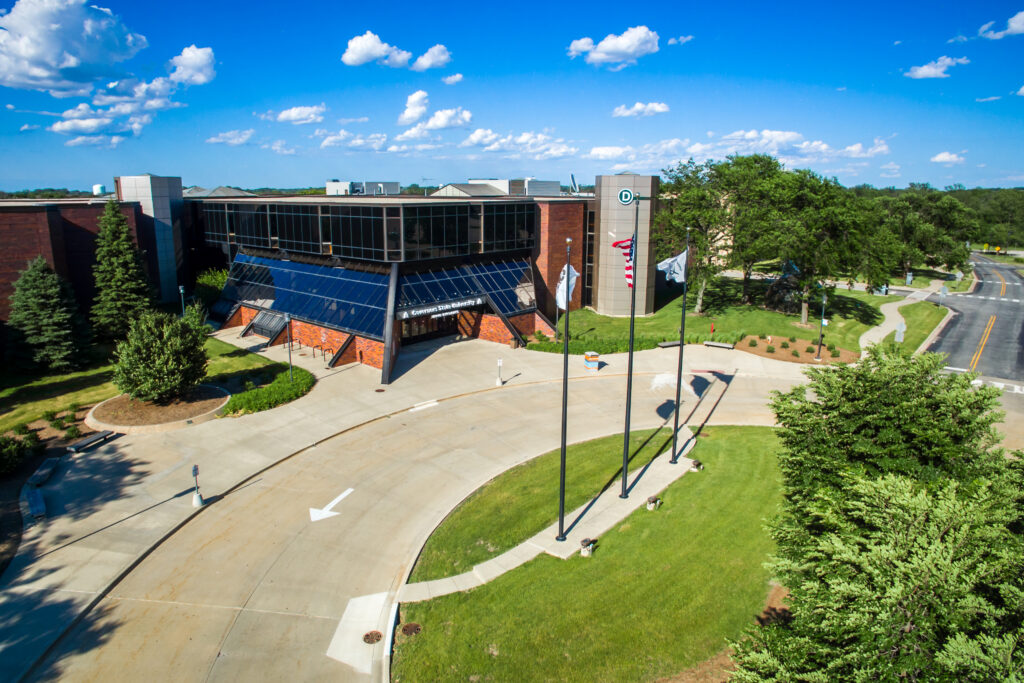
Let us tell you about Governors State University’s counseling programs. They shape professionals who lead social change by helping improve mental health in a variety of communities. Their core values rest on ethical practice and compassionate service that helps individuals, couples, families, and groups throughout their lives.
The Master of Arts in Counseling program at Governors State is accredited by the Council for Accreditation of Counseling and Related Educational Programs (CACREP) through March 31, 2031. This 60-credit hour program lets you choose from three specialization sequences:
- Clinical Mental Health Counseling (CMHC)
- Marriage, Couple, and Family Counseling (MCFC)
- School Counseling (SC)
Their faculty delivers high-quality training that combines theory, research, and clinical practice. They place strong emphasis on cultural competence, social justice, and support throughout the curriculum. This all-encompassing approach helps you learn how to diagnose, consult, and assess clients while providing preventive care.
One standout feature is their on-campus counseling lab serving the local community. Students get hands-on experience here before completing their required practicum and internship hours. Each student must complete a minimum 100-hour practicum experience followed by a minimum 600-hour internship.
The Counseling and Wellness Center (CWC) at Governors State works with Advocate Health Care to provide complete medical, mental health, and case management services. The center aims to enhance students’ mental health, academic experiences, and overall well-being by supporting personal, emotional, and social growth.
Their counselors use several therapeutic approaches. These include faith-based counseling, solution-focused therapy, strength-based counseling, cognitive behavioral therapy, client-centered therapy, and mindfulness-based cognitive therapy. The CWC also works together with academic resources, disability services, career services, and other student service departments to provide complete support.
The program prepares counselors who are culturally competent, socially just, and ethical professionals with personal and professional integrity. They maintain both etic and emic points of view to serve local and global populations. Through the curriculum, hands-on learning, supervision, and professional development opportunities, they give you the tools to make real differences in your clients’ lives.
What counseling programs does Governors State University offer?
Governors State University’s Master of Arts in Counseling program gives students the skills they need to excel in different counseling environments. Students can complete 60 credit hours and choose one of three specialized sequences that align with their career goals.
The program offers these CACREP-accredited sequences:
- Clinical Mental Health Counseling (CMHC): Focuses on applying ethical and socially just counseling theories and interventions to clients with various presenting problems and diagnoses.
- Marriage, Couple, and Family Counseling (MCFC): Concentrates on applying systems theories ethically to couples, marriages, and families from diverse cultural backgrounds.
- School Counseling (SC): Emphasizes creating, implementing, and evaluating analytical insights-driven school counseling programs designed for students’ academic, career, and social/emotional development.
Each sequence combines 33 credit hours of core courses with 27 credit hours of specialty courses. Core courses like Professional Orientation & Ethical Standards, Counseling Theories, and Group Dynamics and Intervention are the foundations of the program. These classes build a solid foundation whatever specialization track you choose.
Your chosen sequence determines your specialty courses. To name just one example, Clinical Mental Health students study Psychopharmacology and Crisis Intervention, while School Counseling students take School Staff Development and College Career Coaching Academy courses.
GSU’s offerings extend beyond the master’s program with several non-degree certificates. These include Post Master’s School Counseling Certificate, Clinical Mental Health Counselor Post-BA Certificate, and Marriage, Couple, and Family Counseling Post-BA Certificate.
Students attend most courses on campus, with school counseling specialty courses in a hybrid format. Class times run Monday through Thursday, from 4:30-7:20 p.m. and 7:30-10:20 p.m..
Graduates work in mental health clinics, hospitals, corporations, governmental social agencies, public and private schools, community colleges, various intervention programs, and correctional institutions. The program prepares students for advanced graduate work at other institutions as well.
Students must complete a 600-hour internship placement to get ground experience before graduation. The Counseling Department offers limited Graduate Assistantships that include a waiver of up to six credits per semester plus a stipend.
Internships/Practicum at Governors State
Practical training serves as the foundation of counseling programs at Governors State University. Students get unique hands-on experience through well-laid-out practicum and internship requirements that ready them for professional practice.
Students must complete a minimum of 100 hours during their practicum, and they spend at least 40 hours directly serving clients. Clinical Mental Health Counseling (CMHC) and Marriage, Couple, and Family Counseling (MCFC) students take two semesters to finish their practicum at the university’s on-campus Counseling Lab that helps the local community. School Counseling students complete their practicum in one spring semester, usually working at elementary or middle schools.
Once students complete their practicum, they start a complete 600-hour internship. The internship spans two semesters and requires students to spend at least 240 hours in direct client contact. MCFC students need to dedicate at least 120 of these direct service hours to relational work (conjoint hours). School Counseling internships run from fall through spring. Summer placements aren’t available because summer school programs are limited.
The university uses specific course codes for these experiences. CMHC students take COUN 8842 (Practicum I) and COUN 8845 (Practicum II), then move on to COUN 8971 (Internship I) and COUN 8972 (Internship II). Students receive weekly individual or triadic supervision and about 1.5 hours of group supervision throughout their practicum and internship.
Professional liability insurance is mandatory before students begin any clinical work. Students need to submit their internship applications early – March 1 for fall start, August 1 for spring start, and December 1 for summer start (CMHC and MCFC only).
The internship concludes with a defense where students present their portfolio of clinical work. This includes a narrative journal, systems analysis paper, audio/video recordings, case study with treatment plan, internship hour logs, and supervisor evaluations. Three faculty members evaluate this defense, which is the final step before graduation.
What sets Governors State University apart?
GSU’s counseling programs stand out from other schools in several ways. The university has earned prestigious accreditations that guarantee top-quality education for students who want to become counselors.
The Division of Psychology and Counseling has two degrees with CACREP (Council for Accreditation of Counseling and Related Educational Programs) accreditation through March 31, 2031. These degrees include a master’s program with three specializations—clinical mental health counseling, marital/couple/family counseling, and school counseling—and a doctoral program in Counselor Education and Supervision.
The College of Education and Human Development has earned recognition from another major accreditor—the Council for the Accreditation of Education (CAEP). This dual accreditation improves the value of GSU degrees by a lot.
Students who complete the School Counseling track can get an Educator License with a school counseling endorsement, thanks to approval from the Illinois State Board of Education (ISBE).
The program’s quality shows in its impressive results:
- 100% program completion rates for Counselor Education and Practice, and School Counseling (with 87% for Clinical Mental Health Counseling and 93% for Clinical Rehabilitation Counseling)
- 100% licensure/certification exam pass rates across all program specializations
- 100% job placement rates for students and graduates in all specializations
Governors State’s mission focuses on cultural competence and social justice. The university prepares ethical professional counselors who can practice and support effectively. The faculty members lead in their fields as journal editors, presidents of national organizations, and authors of testing instruments.
Students benefit from small class sizes and customized academic advising. This creates an environment where they receive individual attention throughout their educational experience.
Next steps
Students must submit a complete application packet to begin their journey in their counseling programs. The original application as a degree-seeking student must meet strict deadlines—February 15 for fall admission and August 15 for spring admission. They do not accept summer admissions.
Your application should include:
- Completed counseling application form
- All required supporting documentation
- Official transcripts from all previous institutions
Note that admission remains competitive—meeting minimum requirements doesn’t guarantee acceptance. Qualified candidates might receive interview invitations after they review your application materials.
Students who aren’t ready for full admission can apply as Graduate non-degree seeking students. This status allows them to take up to six credit hours (typically COUN 6600 and COUN 6630) that may transfer into the degree program later.
Admitted students must complete all prerequisites and candidacy courses in their first academic year. Professional Orientation & Ethical Standards, Social & Cultural Foundations, Beginning Counseling Skills, and Group Dynamics & Interventions serve as foundational courses.
A specialty track change after admission may require a new application review. Students should carefully select their counseling path—Clinical Mental Health, Marriage/Couple/Family, or School Counseling—from the start.